
A Winter Roof Leak Can’t Wait for Spring
A drip that starts in January tends to get the same reaction. It is cold, nobody roofs in the snow, we will deal with it when things warm up. I understand the thinking. It is also the plan I push back on hardest, because a winter leak keeps working while you wait.
Below is how winter works on a Millcreek roof, which parts of the fix can happen right away, and which can reasonably hold until a warmer stretch.
The Short Version
- A leak can be dried in during any month of the year.
- Permanent shingle work gets scheduled into warm windows so the sealant strips bond.
- On day one, protect the inside of the house and stay off the roof.
- Photograph the stain and the drip before you clean anything up.
- Waiting for spring lets water reach decking, insulation and drywall.
What a Winter Leak Is Doing While You Wait
Water that gets past a roof in winter rarely drops straight into a bucket. It follows the underside of the decking, soaks into insulation, runs along framing, and finally shows up somewhere that may be feet away from where it got in.
Every day it continues, it reaches more of the house. Wet insulation stops insulating and stays wet a long time in a cold attic. Decking that sits damp goes soft. Drywall stains, then sags. None of that pauses when the snow stops falling, and much of it gets worse with each freeze and thaw.
Millcreek adds its own pressure. Houses on the east bench take real snow, and canyon wind out of Millcreek Canyon drives it into corners and against walls, right where flashings are weakest. Meltwater from a warm attic runs down to a cold eave and refreezes, and ice building at the edge pushes water back up under the shingles.
So the leak you notice in January is usually the visible end of something already well underway.
The Day It Starts Dripping
A few things are safe for any homeowner to do the same day, and none of them involve a ladder.
First, catch the water. A bucket or tote under the drip, with a towel inside to stop the splashing. If the ceiling is bulging, move furniture and electronics out of the way and keep everyone clear of that spot.
Second, take photos. The stain, the drip, the date, and anything in the attic you can see without stepping on joists you are unsure of. Those photos help me find the source, and they matter if the damage turns out to be storm related.
Third, call. We dry in leaks here in whatever month they happen, so there is no reason to sit with one.
What I would ask you to skip: climbing onto an icy roof with a tarp, chipping at ice along the eaves, or pouring anything hot on the shingles. Each of those is a good way to get hurt or crack the roof, and none of them stops the leak.
What a Winter Dry-In Actually Is
Drying a roof in means stopping water from getting inside, properly, until the permanent repair can happen. It is a real piece of work and deserves to be treated as one.
I start by finding where the water enters, which in winter can mean clearing snow off the area first. Then the damaged spot gets opened enough to see what failed: a lifted section near a ridge, a cracked pipe boot, flashing pulled from a wall, or ice backing up under the lower courses. Depending on what turns up, the dry-in may be underlayment and membrane over the problem, fastened and lapped so wind cannot peel it back, or a temporary cover secured so it sheds water off the roof.
Everything gets photographed before and after, so you can see exactly what was done and what still needs doing.
A good dry-in is built to hold until the weather allows the permanent fix. If the damage came from wind or a falling limb, that work falls under our Millcreek storm damage service.
Why Shingles Wait for a Warmer Window
Permanent shingle work is the one piece of this I schedule around the weather, and the reason is specific.
Architectural shingles carry a sealant strip along each course. After installation, warmth from the sun softens that strip and bonds each shingle to the one below. That bond is what keeps shingles down in wind. In deep cold the strip does not activate the way it should, and shingles installed then can sit loose until the weather warms enough to seal them. On a Millcreek roof exposed to canyon wind, loose shingles are exactly what you do not want sitting up there for weeks.
Cold also stiffens shingles, which makes them likelier to crack when bent over a ridge or worked into a valley.
So the pattern is simple. The dry-in happens now. Shingle work gets booked into the next warm stretch, and I keep an eye on the forecast so you do not have to. You stay protected in between, and the finished repair bonds the way the manufacturer intended.
After the Thaw: Finding Out What Winter Left
Once the permanent repair is done, take a careful look at what the leak touched inside.
Check the attic insulation where the water came through. If it is still matted or damp weeks later, it likely needs replacing. Look at the drywall stain once it has fully dried. A stain that stays put and stays firm can be sealed and painted. One that softens or spreads means moisture is still reaching it, and I want to hear about that.
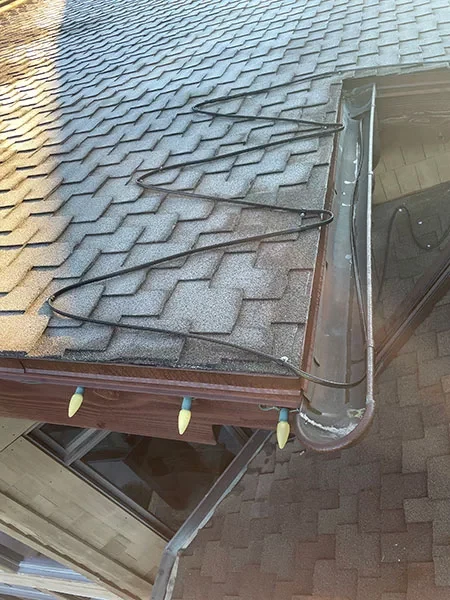
On the roof side, winter leaks sometimes point to a bigger pattern. A single cracked boot is a repair, usually done in a visit. Ice pushing water under the eaves year after year points at ventilation and at how the eave was built, and that conversation may lead to gutters, heat cable, or occasionally a larger project. Both are covered on the Millcreek gutter replacement page and the shingle repair page, and our year-round coverage of town is on the Millcreek page.
Quick Answers
Can you repair a roof leak when there is snow on the roof?
We can dry it in. Snow gets cleared from the area, the source gets found, and the spot is covered and fastened so water stops coming inside. The permanent shingle work is scheduled into a warmer window so the sealant strips bond properly, and you stay protected in the meantime. Nobody should be left waiting on spring with water coming through a ceiling.
Should I put a tarp on my roof myself?
Please do not climb onto a snowy or icy roof to do it. Falls from roofs in winter are serious, and a tarp that is not fastened and lapped correctly often blows loose or channels water somewhere new. Catch the water inside, take photos, and call. Getting the roof covered safely is our job.
Is an ice dam leak different from a regular roof leak?
The water gets in the same way, under the shingles, but the cause is different. An ice dam forms when meltwater refreezes at a cold eave and backs up. The fix in the moment is still a dry-in, and the longer answer usually involves ventilation, insulation and how the eave handles winter. I will tell you which one you have once I have seen it.
Is your ceiling dripping right now?
Call, and I will get the leak dried in, photograph what caused it, and book the permanent repair for the next warm stretch. Finding the leak costs you nothing, so call the day it starts.
Call (801) 750-4243or book a free roof assessment