
Gutters That Can Handle a Sycamore in October
A lot of Millcreek gutters were hung for a gentler climate and a younger yard. Now the trees are huge, the snow comes off the roof in slabs, and the water lands wherever the lot happens to slope. Jeremy climbs up, looks at the whole edge of the roof, and tells you whether you need new gutters or just a better plan for the ones you have.
Big Trees, Old Gutters, and a Lot of Snowmelt
Millcreek has the kind of mature sycamores people move here for. Those same trees drop a heavy load of leaves every October, and most of it ends up in the gutter. A clogged run holds water, the water gets heavy, and the hangers start pulling away from the fascia. By the time a homeowner notices a sag, the gutter has usually been overflowing for a couple of seasons.
Then winter shows up. Snow slides off the shingles, melts during the day, and refreezes at night along the eave. A gutter packed with wet leaves turns into an ice trough, and that ice backs up under the bottom row of shingles. That is how an ice dam starts, and it is why we treat gutters as part of the roof instead of a separate trade.
The houses matter too. A ranch or split-level from the mid-century building years was often fitted with gutters sized for a milder place than the east bench. Small troughs, too few downspouts, and outlets that dump right beside the foundation were normal choices once. They fall behind the first time a real storm or a warm day in February sends everything off the roof at once.
Canyon wind adds its own wear. Gusts out of Millcreek Canyon shake the branches over the house and throws debris into the gutter long after October is over. It also catches a loose run and works the hangers back and forth until the screws strip out. When one end of a gutter has dropped an inch, the wind has usually been working on it for a while.
Replacement is not always the answer. Sometimes the run is sound and needs cleaning, rehanging, and an extra downspout. If a gutter repair fixes it, that is what you will hear from Jeremy.
What We Look at Before Anything Gets Hung
The size of the trough
Gutter size should follow how much roof drains into it and what falls from above. A long, open ranch roof under a big tree sends a lot of water and debris to one edge. We look at the square footage feeding each run and pick a size that keeps up with a spring melt, instead of matching whatever was there before.
Where the downspouts go on a sloped lot
Plenty of lots on the east bench tilt down toward the valley, so the downhill side of the house collects everything. A downspout that drains uphill of the foundation just sends the water back toward the basement. We place outlets where the ground carries water away, and add one when a run is too long for a single drop.
The fascia behind it
A gutter that has overflowed for years usually leaves soft wood behind it. Hanging new aluminum on rotten fascia means the whole run pulls loose again later. We press on the board, photograph anything that gives, and replace the wood before new hangers go in.
Ice, heat cable, and the eave
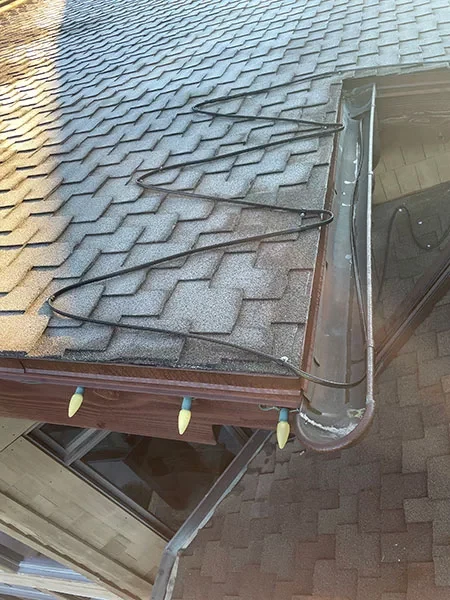
On north-facing eaves and shaded corners, heat cable along the shingles and into the gutter keeps a channel open so meltwater can drain. It buys time and nothing more. If the attic is warm enough to melt snow from underneath, the assessment says so, because that is a roof problem that cable only hides.
Hung for the weight it will carry
Wet leaves and a winter of ice are heavy, and the hangers are what hold all of it. We space them closer where a run sits under a big tree or below a valley that dumps a lot of snowmelt in one spot, and we fasten into solid wood every time. The gutter gets a steady pitch toward each outlet so water does not sit in a low belly and freeze there. Seams go at the corners and near the downspouts, where we can reach them later, and every joint gets sealed while the metal is clean and dry. The old gutters, hangers, and scrap leave with us.
You can see finished gutter and roof edge work in the gallery. Look at how the hangers line up and where the downspouts land.
When the Roof Is Almost Due Too
New gutters are fastened along the same edge the roofer has to work on. If your shingles are close to the end, putting on gutters first and a roof a year later means taking some of them down again. When the photos show a tired roof, Jeremy will say so and let you decide. A roof replacement and new gutters in one job keep the drip edge, flashing, and hangers working together from day one.
If a storm tore the run off, start with storm damage repair. We photograph the damage before touching it, which helps if you file with your insurer. A leak near the eave can also be the shingles, so ask about shingle roof repair while we are up there. Water behind the walls points toward siding repair.
An overflowing gutter is often the first sign of trouble on the rest of the house. Water that sheets over the front edge soaks the siding below it, splashes back onto the trim, and runs down the wall toward the foundation. So when we replace a run, we also check the wall under it and tell you if anything down there needs attention.
Judged From the Shingles Down
We work out of Salt Lake City and cover Millcreek along with the rest of Salt Lake County. Because we are roofers, a gutter gets judged from the roof side first, starting with how the drip edge laps into the trough and where each valley dumps its water. The other work we do in town is on the Millcreek page, and the rest of the county is on the Salt Lake County page.
The assessment costs nothing. Jeremy gets on the roof, photographs the gutters, fascia, and the shingles above them, and hands you a firm written number for the work that is actually needed. We are not the biggest crew in the valley, so every job matters. Book through the contact page or call (801) 750-4243.
Gutter Questions We Get on the Bench
Do I need new gutters, or can mine be fixed?
It depends on what we find up there. If the metal is sound and the problem is loose hangers, a bad seam, or one missing downspout, a repair makes sense. If the run is undersized, bent from ice, or fastened to rotten fascia, replacement is the honest call. You see the photos and decide.
Will gutter guards stop the October leaves?
They help with big leaves, but nothing makes a gutter under a mature sycamore maintenance free. Fine debris and seed pods still collect, and some covers hold snow at the eave. We tell you what is worth adding for your trees and roof, and what just makes the gutter harder to clean.
Is heat cable enough to stop ice dams?
Heat cable keeps a path open so meltwater can drain, which helps on shaded corners and north eaves. It does not fix why snow melts on the roof to begin with. If warm air from the attic is melting it, ventilation or insulation is the real repair, and we will point that out.
Why does water pool by my foundation even with gutters?
Usually the downspouts are in the wrong place or empty right beside the wall. On a lot that slopes toward the valley, one side of the house collects the runoff. Moving an outlet or adding an extension to carry water downhill often solves it without replacing the whole gutter system.
Can you replace gutters in the winter?
Often, yes, on days when the eave is clear of ice and snow. A gutter that has fallen or is pouring water onto a walkway should not wait for spring. If ice has the edge locked up, we deal with the immediate problem and schedule the full run for the next clear stretch.
What does a gutter replacement cost?
That depends on how many feet of gutter the house needs, how many downspouts, and whether the fascia has to be replaced first. After the free roof assessment you get a firm written number based on your house, so you know the cost before any work starts.
