
Most Leaks Start Higher Up Than the Stain
On a Holladay house, the drip over your hallway usually began somewhere uphill, and very often at flashing that freeze-thaw has pried loose from an older masonry chimney. Royal Dane Roofing traces the water on the roof itself, repairs the piece that actually failed, and leaves the sound parts of your roof where they are. Most repairs wrap up in a single visit, with photos of the problem and photos of the fix.

Start With the Chimney
When a Holladay homeowner calls about a leak, the chimney is the first place Jeremy looks. Older masonry chimneys go through a freeze and a thaw over and over across a winter, and each cycle works the flashing a little looser. Water slips behind the counterflashing, runs down the brick inside the roofline, and shows up on a ceiling several feet away, often in a room that seems to have nothing to do with the chimney.
The usual history is caulk. Somebody saw a gap and ran a bead along it, then somebody else ran another one a few years later. Sealant cracks as the metal moves, and every added layer hides the real condition a bit more.
A proper repair pulls the shingles back around the chimney, replaces tired step flashing piece by piece, and reseats the counterflashing into the mortar so each layer sheds water onto the next. If the mortar is crumbling, the masonry has to be sound before new metal is set into it.
A chimney that rises through a long, low ranch roof collects snow against its uphill side after every storm. That pile melts slowly, a little each sunny afternoon, and slow meltwater is exactly what finds a gap in tired flashing. So a chimney leak often shows up days after the storm has cleared, on a calm and sunny day.
Why a Repair Is Usually Where We Land
Plenty of the roofs Jeremy climbs end with a repair plan and nothing larger. That comes from looking, and it holds in Holladay the same as anywhere else we work. A roof with a sound deck and one failed flashing needs new flashing. Selling a whole new roof on top of that problem would be easy, and it would be wrong.
Royal Dane Roofing is small on purpose. Jeremy started it after years of running a roofing company for somebody else, handling everything except the books, and he would rather keep a customer for decades than squeeze one big invoice out of a leak. A repair that holds is the kind of work people mention to their neighbors.
The same standard decides how the repair is built. If lapping a new piece correctly means lifting three more courses, those courses come up, and that is planned from the start.
The Rest of the Leak Call
Ridge caps on exposed peaks
Houses up on the bench put their ridges out in the open. Cap shingles take weather from both slopes, and bench hail cells can crack or bruise them long before the field below shows much. A cracked cap lets water straight into the top of the roof, and on a long ranch ridge the stain may appear halfway across the house. Replacing a run of caps is modest work when it gets caught early.
Pipe boots and vents
The rubber collar around a plumbing vent stiffens in strong altitude sun and eventually splits along the top. Metal roof vents pick up hail dents and lose the seal at their base. Both are quick to replace, and both are on Jeremy’s list at every leak visit, whatever the homeowner originally called about. A split boot often drips only in heavy rain or fast snowmelt, which is how one goes unnoticed for a season.
Before Jeremy arrives
If water is coming through, catch it in a bucket and clear furniture and rugs from underneath. Stay off the roof, especially when it is wet or icy. Photos from inside and from the ground help, and they are all the roof needs from you.
An honest color match
Few new shingles line up exactly with a roof that has spent years under bench sun, and the difference is widest in the first season. Placement changes how much that matters. A patch on a back slope all but disappears from the street, while one on the front slope above the driveway deserves a longer look before anyone settles on a color.
How a one-visit repair runs
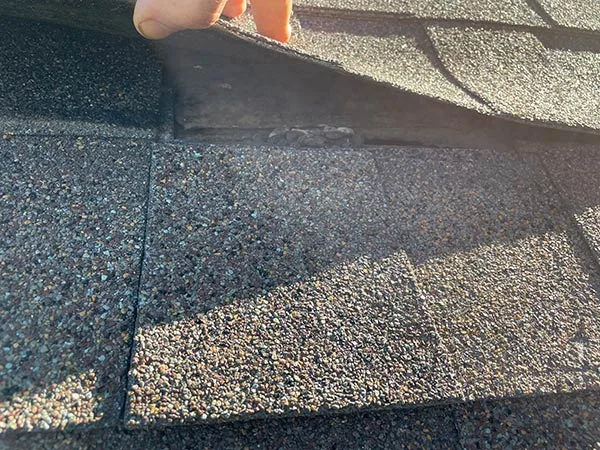
Work starts at the damage and moves uphill, since water enters above where it shows. Damaged shingles come out without cracking their neighbors, wet or torn underlayment is replaced, and new shingles go on at the correct nail line with the surrounding tabs sealed down. An active winter leak gets dried in right away, and the shingle work is finished in a warm window so the sealant strips bond. A magnet goes over the yard before we leave.
When a Patch Would Be Bad Advice
Some roofs are past the point where a repair makes sense. The signs show up across the whole roof: curling on most slopes, granules gone in wide patches, soft decking in more than one spot, older repairs sitting beside newer ones. On a fifties or sixties ranch that has been patched for years, one more fix often just means another call next spring.
At that stage the honest recommendation is a roof replacement, and you see the evidence in the photographs before you hear the word. That way you plan it on your own schedule, and a dripping ceiling does not make the decision for you.
The hard call is a roof in the middle, with good shingles on most slopes and one tired plane that faces the sun all afternoon. There are two fair paths then, a targeted repair that buys time or a replacement planned for a later season, and the timing is up to you.
Sometimes the leak is not a shingle problem at all. Hail and wind damage belong on the storm damage page, because your insurer may want everything documented first. Water spilling over the eaves points toward gutter replacement, and moisture turning up inside a wall below the roofline may be a job for siding repair.
The citywide shingle roof repair page covers our repair work in more depth, the Holladay page lists everything else we do in town, and finished repairs are in the gallery. Book a visit through the contact page or call (801) 750-4243.
Whichever way it goes, keep the photos. They make the next conversation about your roof, with us or with anyone, a lot shorter.
Leak Questions From the East Bench
Why is the stain nowhere near my chimney?
Water that gets behind loose chimney flashing runs along the brick and the framing before it finds a way down, and it can travel a surprising distance first. That is why Jeremy traces a leak on the roof and in the attic, and never judges the source by where the ceiling happens to show it.
Can you fix chimney flashing without a new roof?
Yes, in most cases. The shingles around the chimney come back, worn step flashing is replaced, and the counterflashing is reseated into the mortar. The rest of the roof stays as it is. If the masonry itself needs work first, that happens before any new metal goes against the brick.
Is a cracked ridge cap worth calling about?
It is. The ridge sits at the very top of the roof, so water that gets in there has the whole slope to run down. A few cracked caps are a short repair. Left through a winter of freezing and thawing, they tend to turn into a stained ceiling and wet insulation.
Will the patch stand out from the street?
A little, at first. New IKO shingles have fresh granules and a faded roof does not, so even the closest color reads slightly darker for a while. The best match gets held against your roof in daylight before it goes on, and you decide whether it is close enough for your house.
When would you tell me not to repair?
When the photos show wear spread across the whole roof. Curling on most slopes, bare patches of granules and soft decking in several places mean a patch will only move the leak somewhere else. The pictures stay with you either way.
Why does my pipe boot only drip when the snow melts?
Snowmelt feeds water to the base of a vent pipe slowly and for hours, and a stiff or split rubber collar lets some of it creep underneath, while a quick shower would run over the top. Meltwater can also back up behind snow piled on the uphill side of the pipe. Replacing the boot is usually a short repair.
