
When a Hail Cell Parks Over the Bench
Up on the east bench under Mount Olympus, the hail cells that build over the bench are what Holladay roofs have to live with. After one passes, the damage is easy to miss from the lawn, and the door knockers tend to show up fast. Royal Dane Roofing works storm damage from our Salt Lake City base, and the camera comes out before anyone lifts a shingle.
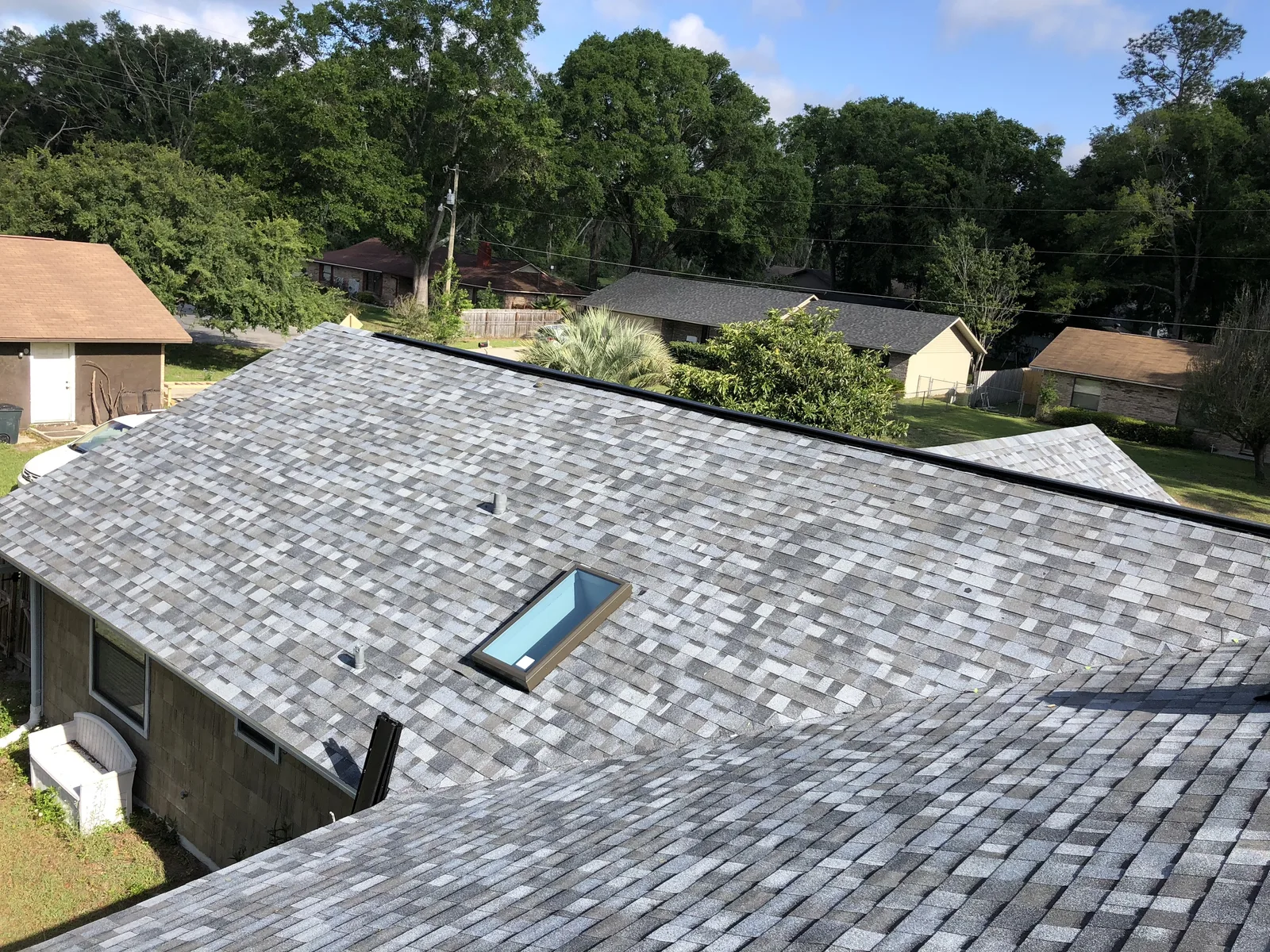

What Hail Leaves Behind on a Holladay Roof
Skylights and vents give it away first
Hail marks soft, exposed materials before it leaves anything obvious on shingles. Metal vent caps pick up round dents. Skylight frames and their flashing show dings along the upper edge, and a cracked skylight seal can leak all on its own. Fresh damage on those parts tells Jeremy, and later an adjuster, that the storm reached the roof and roughly how hard it hit.
Bruises you cannot see from the driveway
On the shingles themselves, hail leaves small circles where granules have been knocked away, and the mat underneath feels soft under a thumb. From the ground, nearly all of that is invisible. It still shortens the life of the shingle, and some of it becomes a leak a season or two later.
Photographed before anything moves
Jeremy documents the roof one slope at a time before a single tab is lifted: close-ups of each bruise and dent, then wide shots that show where each one sits on the house. You keep every image. That record is what an adjuster checks against, and it protects you if anyone questions the claim down the road.
The cover goes on after the photos
Open damage gets covered so water stops coming in, and that happens after the photographs so nothing is lost from the record. A tarp flapping loose in the wind is no dry-in, so the cover gets fastened to hold until the real repair.
Branches and debris
Hail cells usually bring wind along, and big limbs over a roof can come down in it. A branch strike can crack decking under shingles that look barely scuffed, so Jeremy walks any area where debris landed and checks it from the attic when he can. Gutters packed with shredded leaves and loose granules after a storm get noted too, because they slow drainage right when the roof needs it most.
Wind leaves quieter marks
On the shingles, wind tends to work at the edges of a roof. A creased tab near the ridge or a shingle gone from a rake is easy to miss from the lawn, and a creased tab can let water in for months before a stain appears. Those spots go into the same photo set as the hail.
Standing Next to the Adjuster
When your insurance company sends someone out, we meet them at the house and walk the roof together. Jeremy points out each area he photographed, and the adjuster sees the same marks with their own eyes.
The scope we write sticks to what the storm did. Years of ordinary wear stay off it, and real hail and wind damage stays on. We do not inflate claims or play games with your deductible. Both put the homeowner at risk with their insurer, and a small company keeps its name by keeping its paperwork straight.
If the adjuster misses something, we say so politely and point to the photos. If they spot wear we left off the scope, we agree with them. Either way the roof is judged on the evidence.
You stay in charge the whole way, and filing and approving the scope are your decisions. The insurance claims page walks through each step, and Jeremy is a phone call away at (801) 750-4243 when a letter from the insurer does not make sense.
Close Enough to Drive Past Your Roof
After a big hail cell, yard signs from roofing companies nobody on the street has heard of can sprout across half a block within days. Some of those crews do fine work. Others finish fast and chase the next storm, and a year later, when a valley starts to drip, the number on the contract no longer reaches anyone.
Holladay is a short drive from our Salt Lake City base and sits comfortably inside the fifty miles of Salt Lake County we cover. You are a regular stop for us. The person who photographs your roof is Jeremy, and he is also the person who picks up when you call next year.
Salt Lake County is where we live and work, so the roofs we fix after a storm are roofs we keep driving past for years. That alone is a good reason to do them well.
Before signing anything handed to you on the porch, find out whether the company has a local office and who will look after the roof once the check clears. Having Jeremy take a look first is free, and it gives you something to compare against.
Sometimes the Storm Mostly Missed You
A hail call does not always end in a claim, and a small company has no reason to pretend it does. Plenty of storm visits wrap up with a set of photos and a short repair list. A couple of cracked ridge caps and a dented vent cap may be simpler to fix outright than to run through your insurer, and Jeremy will tell you which side of that line your roof falls on.
For that kind of damage, shingle roof repair covers how the work gets done. You still get the photos, so if something shows up later you have a record of what the roof looked like after the storm.
The other quiet outcome is a roof that took no real hail at all. Dented patio furniture and a torn window screen do not always mean the shingles were hit. When the photos show a clean roof, nobody talks you into a claim the roof does not support.
If every slope took hits, the honest answer can be a full roof replacement with IKO architectural shingles and new flashing throughout. Storms also dent gutters and beat on the edges of a house, so while Jeremy is already on site the assessment takes in gutter replacement and siding repair needs as well.
Our broader storm damage page covers the process in more depth, and the Holladay page lists the rest of our work in town. Restored roofs are in the gallery. When you are ready, the contact page gets you on the schedule.
Hail Questions Worth Asking Early
Does hail on my gutters or window screens matter for the claim?
It can. A dented downspout or a shredded screen is evidence the storm hit your property, and a policy that covers the house often covers those items as well. Coverage varies, so check yours. Either way, photograph them before anything gets fixed or thrown out, because a repaired screen proves nothing later.
Should I call my insurer or Jeremy first?
Having the roof looked at first usually helps. With photos in hand you know what the storm actually did before you decide if filing is worth it. The choice about filing stays entirely with you, the same as every other decision about your house.
Will you help me get around my deductible?
No. Games with a deductible put the homeowner at risk with their insurer long after the crew has gone home. What we will do is document the damage carefully, write an honest scope, and make sure every item the storm actually caused is on the claim for the adjuster to review.
Can you stop a leak before the adjuster visits?
Yes. Jeremy photographs the damaged area first, then dries it in so water stops coming inside. The photos keep the evidence on record, so covering the damage does not erase it. Permanent shingle work is saved for after the claim is sorted out and the weather is warm enough to bond.
What if I only notice the damage months after the storm?
Call anyway. Many policies set a window for reporting storm damage, so read yours or ask your agent how long you have. Hail bruising looks different from ordinary wear, and dated photos help tie the damage to a particular storm. The sooner the roof is documented, the easier that connection is to make.
My skylight only leaks during storms. Is that hail damage?
It can be. Hail cracks skylight glazing and dents the flashing frame, and either one lets wind-driven rain inside. Older seals also fail with age, which is not storm damage. Jeremy checks the frame, the flashing and the shingles around it, and the photos show which problem you actually have.
