
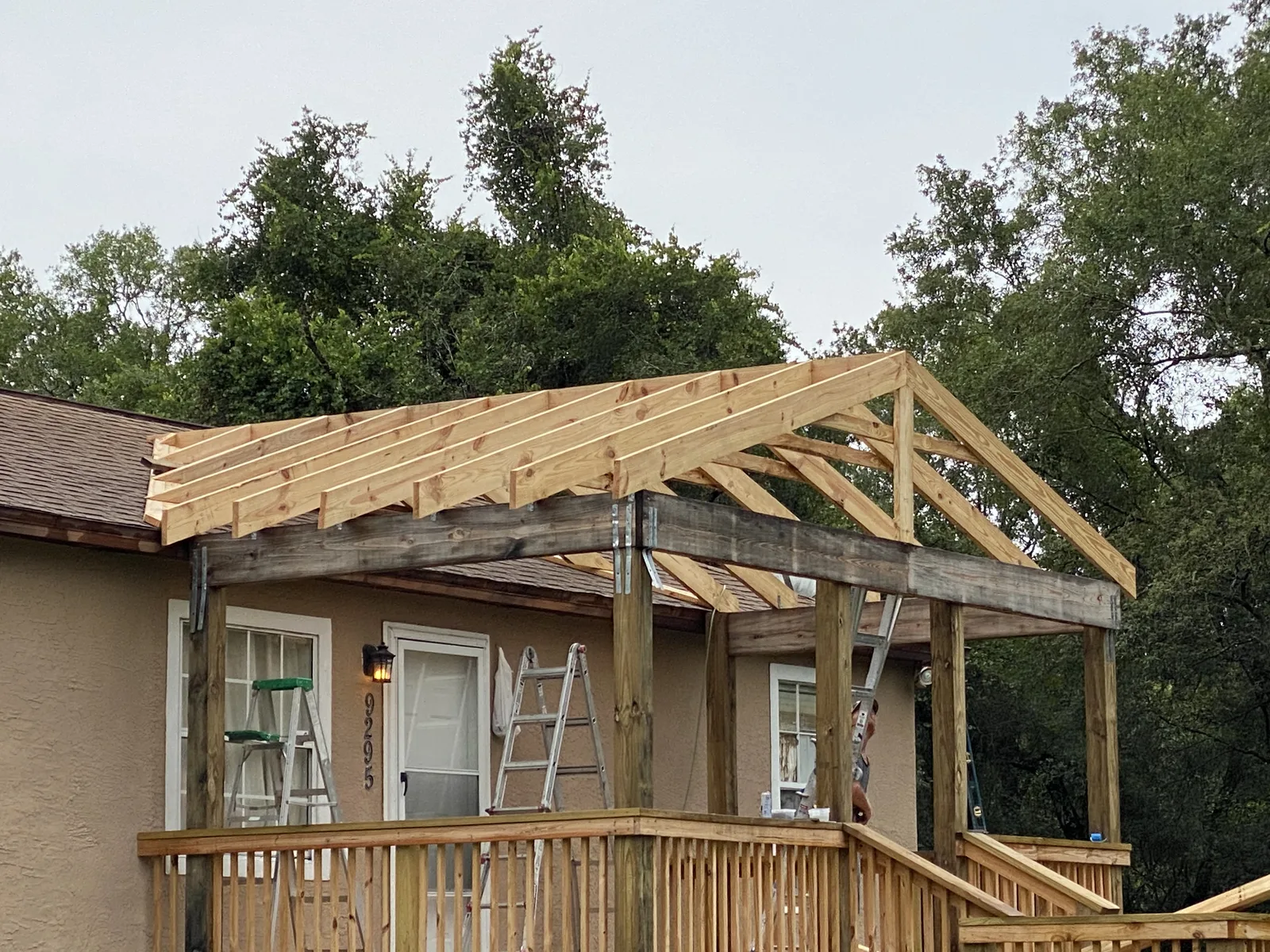
Move the Water Off Your Deck Before It Finds the Wood
Every gap between your deck boards is a funnel. Rain and snow melt run straight through onto the framing, the ledger board at the house, and whatever you keep underneath. Under deck drainage catches that water, slopes it to one edge, and sends it down a downspout away from the foundation. Jeremy sets the pitch himself, then runs water on it while you watch.
The Half of the System Nobody Sees
A deck is built to let water through. That is what the gaps between the boards are for, and it is the right design for the boards themselves. The problem is where that water goes next. On a raised deck it lands on the joists, runs down the beam, soaks the posts, and pools against the ledger board where the deck is bolted to your house. Salt Lake City makes that worse than most places, because we cycle between long dry spells and hard soaks, and wood that swells and shrinks over and over opens checks that hold water instead of shedding it.
Homeowners usually notice the visible half first: the patio underneath is unusable, the furniture stays wet, the hot tub cover is filthy. Fair enough. But the expensive half of the problem is the framing. A ledger board that stays damp season after season rots from the back side where nobody looks, and the rim joist behind it goes with it. That is a structural repair and a house repair at the same time, and it is entirely preventable with drainage that does its job.
Under deck drainage is the water-management side of an under deck system. A membrane or trough assembly under the joists catches everything coming through the boards, a deliberate slope moves it in one direction, and a gutter with a downspout at the low edge carries it clear of the house. It works whether or not you finish a ceiling below it, which matters if you want the framing protected now and the finished look later. If you do want the finished ceiling, that is the under deck installation side, and the two get planned together.
Because the outlet ends in a gutter and downspout, the drainage has to agree with the gutters already on the house. Sometimes that means tying into an existing run, sometimes it means the existing run is undersized or pitched wrong and needs to be addressed as part of a gutter replacement. We tell you which one you are looking at before any work starts.
Where the Water Goes, Step by Step
Reading the deck before we touch it
Jeremy gets under there with a light. He is looking for staining on the joists, dark streaks running down the posts, soft spots at the ledger, and whether the original flashing at the house was installed or skipped. He is also reading the grade: which direction the yard falls, where a downspout can discharge without dumping into a window well or against the foundation. That reading determines the whole layout.
Flashing the ledger first
The ledger is where a deck meets the house, and it is the single most common failure point on a raised deck. Before any collection goes in, that connection gets flashed properly so water is directed out and away rather than behind the board. Doing drainage without addressing the ledger is treating the symptom, and it is the shortcut that leaves a homeowner with a rotted rim joist five years later.
Setting the slope
The collection surface gets a consistent pitch across the full span toward the low edge. Not much slope is needed, but it has to be continuous, and every beam or post that interrupts the run has to be worked around rather than sagged over. A flat spot is where debris settles and where water sits, and standing water is how a drainage system becomes a mosquito pond.
The gutter and the outlet
At the low edge the water lands in a gutter sized for the surface area above it. That gutter feeds a downspout, and the downspout has to actually take the water somewhere: away from the foundation, away from the walkway, away from the spot where your gate swings. It is the least glamorous part of the job and the part that decides whether the system works. Finished deck and gutter work around the valley is in the gallery.
Testing it before we leave
We run water through it and watch where it goes. If there is a slow spot, we fix it that day. Nobody should find out their drainage does not work during the first February thaw. Questions before you commit are welcome any time through the contact page.
Winter Is the Real Test
Summer rain runs through a deck in a few minutes. A Wasatch Front winter is different: snow sits on the boards for weeks, melts a little every sunny afternoon, and refreezes overnight. That slow, repeated drip is what soaks framing to the core, and it is the loading a drainage layout has to be designed around. We pitch for melt water, not for a summer shower, and we keep the outlet clear of the spot where ice tends to build.
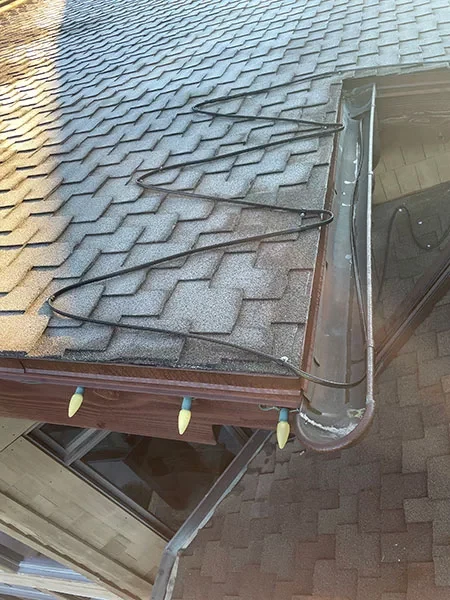
On homes that already fight ice at the roof edge, we look at the whole water path together rather than solving the deck in isolation.
Who Does the Work
Royal Dane Roofing is family owned and residential only. Jeremy is on every job, which is the whole reason the company exists the way it does: not the biggest outfit around, so every job matters. Office hours are Monday through Friday, 7am to 4pm, and calls get returned by a person.
We cover Salt Lake City and about fifty miles out, across Salt Lake, Davis, Weber, Utah, Tooele, Summit, and Morgan counties. The full list is on the service areas page. Call (801) 750-4243 or book an assessment and he will come read your deck.
Drainage Questions, Answered Straight
What does under deck drainage cost?
It comes down to the square footage of deck above, the height off the ground, how many posts and beams break up the run, whether the ledger needs repair or reflashing first, and where the downspout can safely discharge. Book a free roof assessment and Jeremy gives you a firm written number for your deck rather than a guess over the phone.
Can I get drainage without a finished ceiling underneath?
Yes. Drainage protects the framing and keeps the ground below dry on its own, and plenty of homeowners start there. If you later want the space to read as a finished outdoor room, the under deck installation ceiling goes in over the same water path, so nothing gets torn out and redone.
My deck already looks fine. Do I need this?
A deck that looks fine from above can still be losing its ledger. That rot happens on the back side of the board against the house, where nothing shows until something moves. If your deck is more than a few years old and has never had water managed under it, it is worth having someone crawl under with a light. If the framing is genuinely dry, we will tell you that and you will not owe us anything.
Will it clog with leaves and needles?
Anything that collects water collects debris. The layout matters: continuous slope with no flat spots means most of it washes to the low edge rather than piling up mid-span. The gutter at the outlet is the part that needs an occasional look, same as the gutters on your roof, and we show you where to check it.
Does the downspout have to tie into my house gutters?
Not necessarily. Sometimes the cleanest run is its own downspout with its own discharge point. Other times tying into the existing system is simpler and looks better. What decides it is the volume coming off the deck and whether your current gutters can carry it, which is a judgment call we make on site instead of by default.
How long does the job take?
Most decks are one to two days once material is on site. Ledger repairs, unusual framing, or a wrapped multi-level deck add time. You get the schedule before we start, and if a storm is coming we move the date rather than working around it.
