
Where Two Roofs Meet on a Millcreek Split-Level
Most of the leaks I chase on older Millcreek houses do not start in the middle of a shingle field. They start at a seam. Somebody added a bedroom, a garage or a second level decades ago, tied the new roof into the old one wherever it happened to land, and water has been testing that joint every winter since.
I have been on roofs for about ten years and running Royal Dane for three. We are small on purpose, so I am the one who climbs up and looks at that seam, and I would rather explain what I find there than hand you a vague answer.
The Short Version
- An addition tied into an older roof often creates a valley nobody designed.
- Water, snow and leaves all collect in that low line first.
- A proper valley has ice and water shield running through it before a single shingle goes down.
- A ceiling stain near where the addition joins the house is the usual first sign.
- Fixing the seam is often a repair, and occasionally it starts a bigger conversation.
How an Addition Ends Up With a Valley Nobody Planned
Millcreek has a lot of mid-century ranches and split-levels, and plenty of them have grown over the years. A family room went on the back. A garage picked up a bonus room. Each of those projects needed a roof, and the easy move was to run the new roofline into the old one and sort out the meeting point on the day.
That meeting point is what I call an improvised valley. On a house designed from the start with two roof planes, the valley gets planned: the framing lines up, the slopes are matched, and there is room to lay material properly through the low line. On an addition, the builder works with whatever the original roof gives him. Sometimes the pitches differ. Sometimes the new plane dies into the old one at an awkward angle, or ends against a wall instead of flowing toward a gutter.
The addition may well have been built right. Even so, the seam carries more risk than any other stretch of the roof, and it deserves to be looked at first.
Why the Seam Is the First Place Water Finds
A valley is where two roof planes send their water. On a normal day that works, because the water runs down and off. Trouble starts when something slows it.
In Millcreek, several things slow it. The houses sit on the east bench under mature sycamores, and every October the leaf load is heavy. Leaves land in the valley and stay, and a wet mat of them holds water against the shingles for days. In winter, snow drifts into the same low line and melts slowly, and meltwater that refreezes can back up under shingle edges.
Then there is wind. Canyon wind pushes rain sideways, and a seam that was lapped loosely lets that water travel uphill under the shingles. On an improvised valley the laps are often short, the metal is often old, and the underlayment may be whatever went down decades ago. Put those together and the seam leaks long before the rest of the roof is tired.
What a Proper Valley Looks Like Underneath
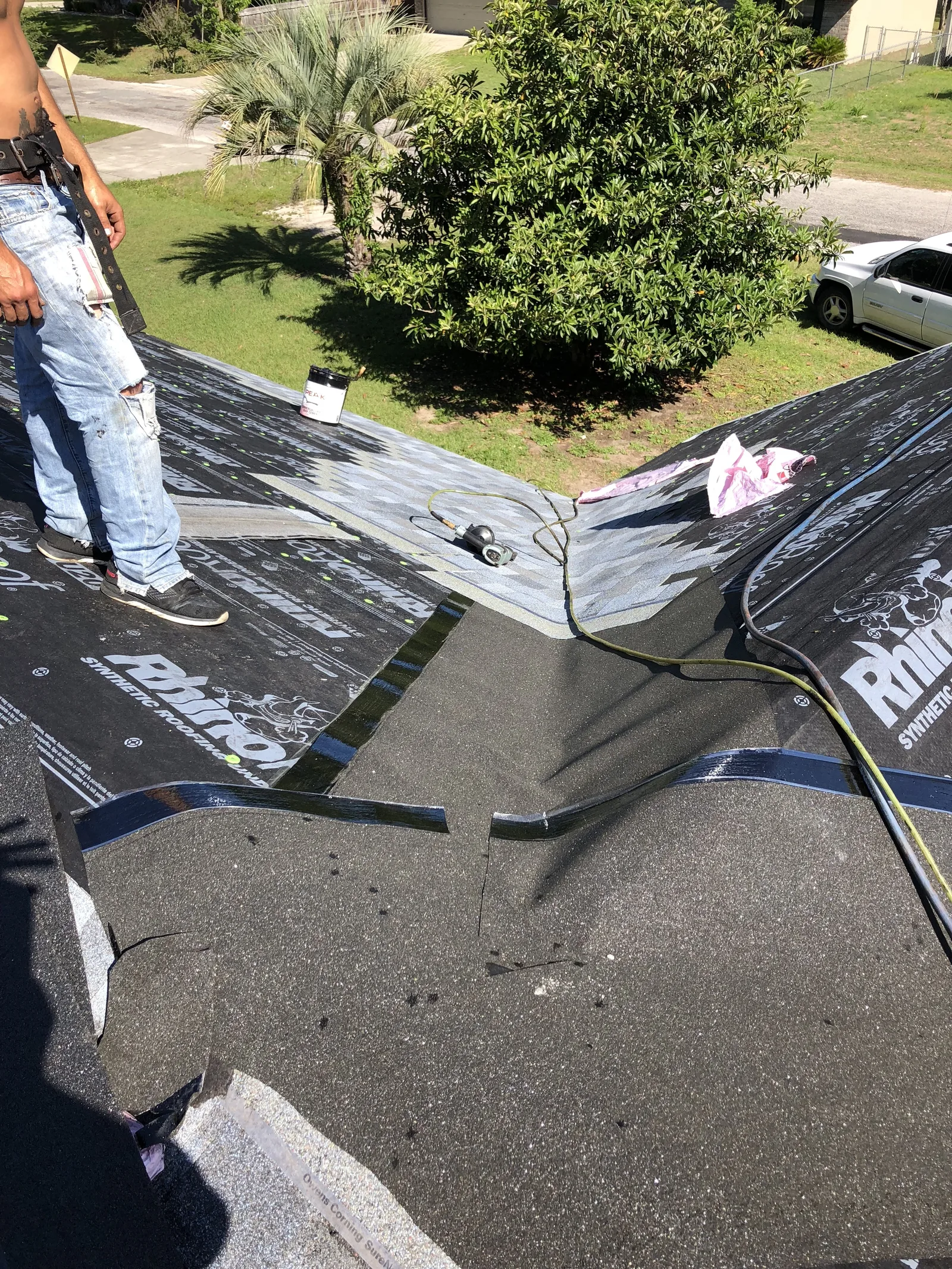
Most of a valley’s quality is invisible once the shingles are on, which is why I photograph it before and during the work.
It starts at the decking. The boards have to be solid through the whole low line, because a soft spot there becomes a dip that holds water. Then synthetic underlayment goes down, and ice and water shield runs through the valley itself, since that stretch takes the worst of a Utah winter. That membrane is what keeps water out when snow and ice sit on the roof longer than anybody would like.
Over that, the valley gets finished in one of the accepted ways, with shingles woven or cut through the line, or with metal down the center. Which one depends on the pitches meeting there and the shingles going on. For our work those are IKO architectural shingles, laid to the manufacturer’s instructions instead of whatever was quickest.
Every layer runs continuously through the low line. No short laps, and nothing depending on caulk to hold back water.
Signs Your Seam Is Already Letting Water In
You usually do not need to climb anything to suspect a seam problem. The house tends to tell you.
Look at the ceilings in the rooms closest to where the addition joins the original structure. A brown ring or a soft patch of drywall near that junction is worth a call, even if it dried out and never came back. Look at the wall where a lower roof ends against a taller one. Peeling paint or swollen trim there points to flashing that has stopped doing its job. In the attic, if you can reach it safely, a darker stripe on the decking along the valley line is water history written in wood.
From the ground, leaves still packed into the valley long after the trees are bare tell you the water is slowing there as well.
One thing to leave in the garage is the tube of sealant. Caulk smeared over a seam hides the leak for a season and makes the real repair harder to read later.
Repairing the Valley or Rethinking the Roof
Once the seam is opened and photographed, the question is how far the problem reaches. Often it stops at the valley. The decking is sound, the shingles away from the seam still have life, and the fix is to rebuild that low line properly and tie it back into the field. A lot of seam calls end that way, with no replacement conversation at all.
Sometimes the photos say something else. If the decking under the valley is soft for several feet in each direction, or the shingles on both planes are brittle and curling, patching the seam just moves the next leak a few feet over. In that case I will show you why, and walk you through what a replacement on a house like yours involves.
Repair work is explained on our Millcreek shingle repair page, and a full tear-off is on the Millcreek roof replacement page. How we work this part of the valley in general is on the Millcreek page.
Quick Answers
Can a leaking valley be fixed without replacing the whole roof?
Often, yes. If the decking under the seam is solid and the shingles on both sides still have life, the valley can be opened, rebuilt with ice and water shield through the low line, and tied back into the existing roof. If the damage spreads well past the seam, I will show you photos of that before recommending anything bigger.
Why does my addition leak when the rest of the roof is fine?
Because the seam where the two roofs meet does most of the work and got the least planning. Water, snow and leaves all collect in that low line, and on an addition the laps and flashing were often fitted to whatever the old roof allowed. The open slopes shed water easily, so they can look fine for years while the seam struggles.
Should I clear leaves out of my roof valley myself?
From the ground with a long tool, that is reasonable. Climbing onto a pitched roof covered in wet sycamore leaves is not something I would ask any homeowner to do, especially on a split-level with a drop on one side. If the valley keeps packing full every fall, mention it when we come out to look.
Is the seam on your addition behind that ceiling stain?
I will get up there, open what needs opening, photograph the valley and tell you plainly whether it is a repair or something bigger. That look at the seam costs you nothing.
Call (801) 750-4243or book a free roof assessment